
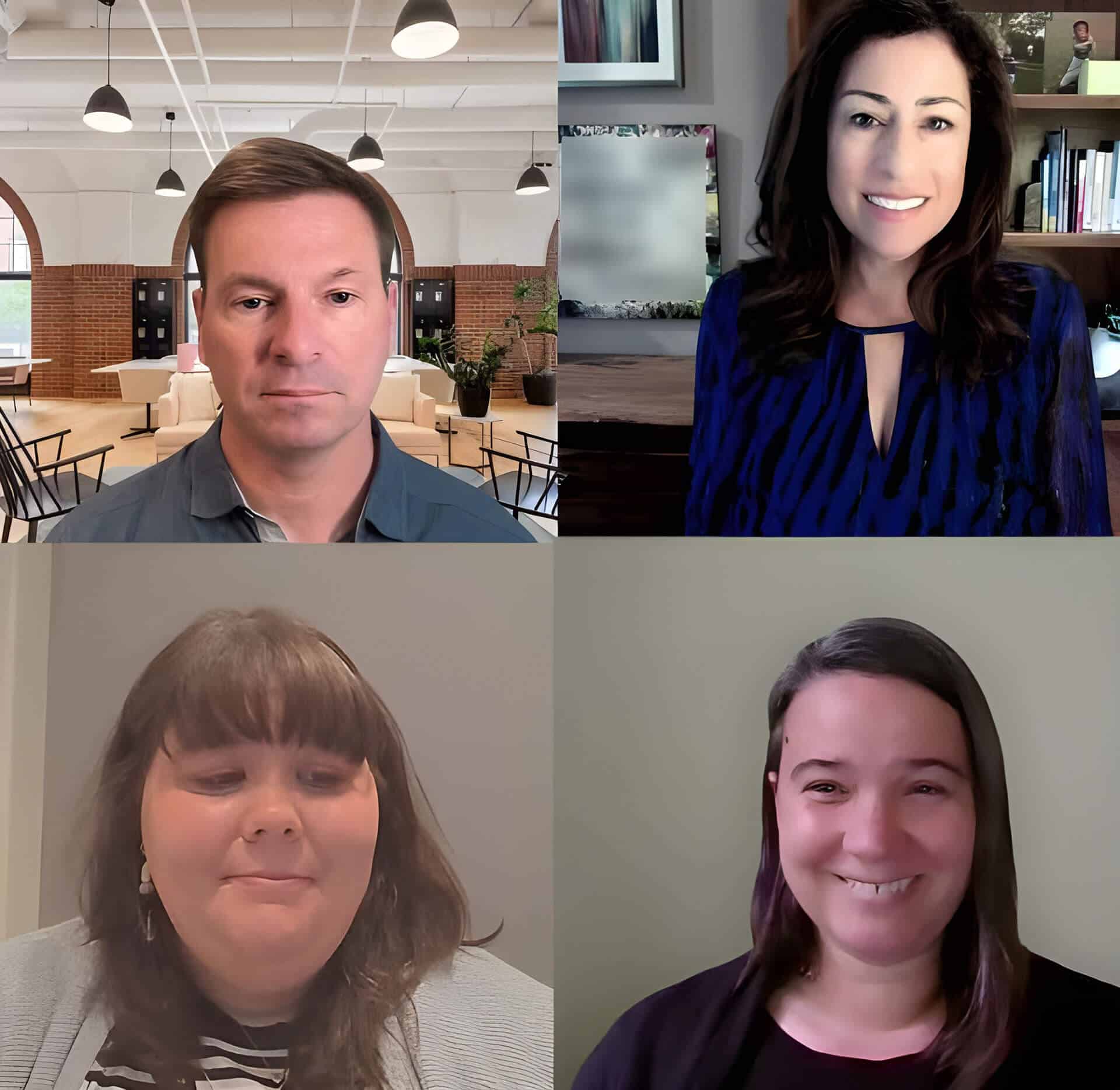


In the most recent installment of our virtual series on Nonprofit Board Empowerment, we tackled one of the most debated questions on nonprofit leadership: “What role should the board take in fundraising?”
We had four seasoned nonprofit leaders leverage their many years of experience from working with boards, serving on boards, and consulting for boards to share their perspectives on how to fundraise effectively. Each presented a different approach and defended their methodology as the others raised objections and asked provocative questions to get the audience thinking. This debate-style format wasn’t meant to tell you what will work best for every organization but rather provide helpful insight for you to leverage as you analyze and evaluate your own fundraising efforts.
At the end, we opened it up to the packed room of participants to get their input on what has worked for their organizations and what hasn’t. Then, our panel of experts offered some bonus tips on how nonprofit leaders can get reluctant boards engaged with fundraising efforts. The conversation was rich, and the insights were meaningful!If you missed the webinar, this event summary will give you a taste of what was shared. We’ll tell you what was advocated for (and why!) as well as the objections that were raised so you can be better informed about your fundraising strategy options.
Views on the Board’s Role in Nonprofit Fundraising
The perspectives that were offered included a broad set of perspectives that ranged the gamut from no board involvement to all board involvement in the following ways:
1. No Board Fundraising Involvement – Staff Only
Defined: The board takes a hands-off approach, viewing fundraising as strictly the domain of staff. Board members focus on governance, strategy, and fiduciary oversight, while all donor cultivation, solicitation, and stewardship are handled by development professionals or the Executive Director.
2. Personal Giving and Limited Sphere Advocacy
Defined: Board members are expected to make a personally meaningful annual gift and help open doors by connecting their networks to the organization. This model treats board members as ambassadors, not fundraisers, asking them to host events, invite friends, and make introductions.
3. Committee-Driven Fundraising
Defined: Fundraising is centralized within a development or advancement committee, often made up of board members with fundraising experience. This group partners closely with staff to plan campaigns, steward major donors, and coach peers. The rest of the board participates lightly or not at all.
4. 100% Active Fundraising Participation
Defined: All board members are engaged as active fundraisers – giving, asking, and helping move donors through the pipeline. Fundraising is seen as a core part of board service, with training, tools, and staff support provided to ensure success.

No Board Fundraising Involvement – Staff Only
John Pepperdine, Principal at Make Philanthropy Work, advocated for a staff-only fundraising model. John has over 25 years of experience in philanthropy at institutions of higher education and social service organizations.
Making the Case:
John argued that in today’s ever-changing world of nonprofit fundraising, fundraisers need to stay on top of the latest trends across topics like cryptocurrency and donor advised funds. His main point was that expertise is needed to succeed, and that level of expertise can’t reasonably be expected to come from the board because they’re busy with the areas of governance, strategic planning, and fiduciary oversight. And while some board members may be great fundraisers, using them in that capacity robs staff of the opportunity to learn that skill, which means you’re not developing your bench.Furthermore, John articulated that for fundraising to be successful, it needs to be aspirational but also sincere. His argument was that staff understand what’s happening in real-time better than anyone else who is connected to the organization in a volunteer capacity. This gives them a firm grasp on how the messaging and branding is changing over time, which is critical for fundraising success.
Objections Raised:
- Removing the board from fundraising may work for large institutions and universities, but it doesn’t work for smaller nonprofit organizations.
- There is a high potential for staff burnout when they are shouldering the entire responsibility for fundraising.
- It’s possible to have staff help drive fundraising to reap these kinds of benefits without asking them to own it entirely.
- Many Development Directors only stay for 13 months and then they move on to their next role. When they leave, the organization can lose key donors and funders also.
- When the board isn’t involved in fundraising, the risk of mission creep increases. The board is the primary holder of the organization’s mission compass, and without tying that direction to fundraising efforts the mission can easily go off course.

Personal Giving and Limited Sphere Advocacy
Marcia Beckner, Senior Associate at Valtas, advocated for limited sphere advocacy in fundraising. Marcia is a decorated nonprofit consultant and advisor as well as the Founder and CEO of Culture Cares Global.
Making the Case:
Marcia opened with what she called a “truth bomb” that anchored her perspective: fundraising doesn’t start with money – it starts with people. She asserted that people are the ambassadors, champions, and spark plugs that light the way to getting the word out about your mission. She explained that fundraising is about getting people to give of their time, talents, or treasure and that when it comes to their treasure, you need to inspire generosity in a way that feels authentic and energizing.She then gave an example of a board member named Maria at a small environmental nonprofit who was nervous about her organization’s fundraising goals because she wasn’t comfortable asking people for money. However, she believed deeply in the organization’s work, so she leveraged her own interests and strengths to make a difference in a way that felt more comfortable for her – she hosted a backyard event for her friends, family, and colleagues. She invited the organization’s CEO to speak and announced her own personally meaningful gift at the party to model her commitment to the organization. The event resulted in three new major donor prospects, one of which later went on to join the board. The event was comfortable (low-pressure) and successful (high impact). Marcia explained that this kind of fundraising approach brings the whole team along, making it wildly successful.
Objections Raised:
- The “give what you can” approach doesn’t work when no one on the board can give anything or when the difficult conversations don’t happen so none of them give much.

Committee-Driven Fundraising
Kate Nagle-Caraluzzo, Executive Director at Town hall Seattle, advocated for a committee-driven approach to fundraising. Kate is a proven performer and strategic visionary with almost a decade of nonprofit leadership experience in arts and culture.
Making the Case:
Kate explained that committee-driven fundraising builds on the personal giving and limited sphere advocacy model. The distinction is that it creates greater structure and shared ownership. She noted that using a committee eliminates the perception that fundraising is done by a heroic set of individuals, replacing it with the opportunity to build staff connections.
Kate explained that by deciding who will be activated in a fundraising capacity for the year ahead, greater organizational alignment can be achieved because fundraising becomes more intentional, rather than just an after-thought. The committee will collectively decide on their priorities for the coming year, determine which donors to go after, and identify which KPIs will be used to analyze effectiveness. This approach combats the negative effect that staff or board turnover can have on overall fundraising efforts.
She further articulated that using a committee-driven approach helps create clear lanes for the board, moving fundraising into a leadership opportunity, instead of a side activity or a burden.
Objections Raised:
- Burnout is a concern among staff members who are working with the fundraising committee in addition to handling the other day-to-day demands of their roles.
- These types of committees tend to have high turnover because there is a perception among board members that the people on these committees are the ones that drew the short straw, so they try to rotate off as soon as they can.
- When fundraising is separated out into a distinct committee there is the potential for it to seem more like a niche activity than a shared function.

100% Active Fundraising Participation
Hannah Cavendish-Palmer, Senior Associate at Valtas, advocated what she called the “go big or go home” model of fundraising – 100% active board participation. Hannah has been on the front lines of organizational development for more than 15 years as a nonprofit consultant and interim leader.
Making the Case:
Hannah came out of the gate fast, mirroring the swiftness of her proposed approach. She explained that in the 100% active fundraising participation approach that there are no half measures – it’s all in! She advocated for a full-steam ahead approach that turns all board members into active fundraisers, meaning that they give, ask, and prospect.
She articulated that this model of fundraising builds a culture of ownership and ensures that board members are “in it together” with staff. It ensures everyone has a stake in the organization – in helping to advance its mission, in staying committed, and in creating accountability. This motivates board members to get the training and tools that they need to fundraise well, increasing capacity. She also argued that making fundraising a core duty changes the culture of the board and makes them more in-touch with reality. For instance, because they are enmeshed in the cycle of fundraising, they won’t ask for outlandish funding goals or timeframes.
Furthermore, Hannah argued that not allowing board members to opt out of fundraising activities transforms not only an individual organization’s fundraising potential but also promotes a broader culture of philanthropy, which helps us all.
Objections Raised:
- It can turn passion into pressure, leading to burnout.
- This model is the dream scenario, but it’s just not possible in real-life. It’s too idealistic!
- Many board members are afraid of making the ask, which means they’ll avoid this kind of model entirely. As a result, the organization will miss out on a large pool of talented and well-connected potential board members.
- Asking everyone to do the same thing creates a one-sized-fits-all approach that fails to leverage board members’ different experiences, resources, and strengths.
- This can unintentionally create barriers to inclusion and stifle diversity.
- It can turn passion into pressure, leading to burnout.
The Audience’s Perspective
After the debate the nonprofit staff, leaders, strategists, and board members in attendance voted on what they think the board’s role in nonprofit fundraising should be. What did they decide?
There was an even split in votes between the “Personal Giving and Limited Sphere Advocacy” and “Committee-Driven Fundraising” models that were presented by Marcia and Kate. The message here was clear – the audience felt that the board had some role to play in fundraising, but it shouldn’t be a main responsibility for all board members. Unlike the “100% Active Fundraising Participation” model, which requires all-in fundraising participation across the board uniformly, the audience felt that the board should either have a lower uniform bar or concentrate engagement in a subgroup.
Key Takeaway
In the end, it was clear that all the fundraising models discussed work for some organizations and don’t work for others. Interim nonprofit leaders, advisors, and consultants should have a strong handle on what each model looks like and how to execute them so they can draw from their fundraising model toolbelt to use the right approach in the right situation.
BONUS: Taking The First Steps to Get a Reluctant Board Started with Fundraising
What if your board wants to be entirely hands-off when it comes to fundraising, but you know you need their help? How can you take small steps in the right direction to encourage them to get more involved? Our panel of experts offered the following quick tips:
- Research who your board members are connected with on LinkedIn and decide who you want to approach. Then ask the board member that knows that prospective donor to have the conversation. Board members are typically far more likely to be engaged in the process if you ask, “Could you talk to Bob Smith?” versus asking, “Who do you know that you could approach?”
- Set up a separate 1×1 meeting with each board member and ask them to talk to five people they could ask for a gift …and have them do it with you right there! This eliminates the possibility that they’ll forget to send the email/text or make the call later.
- Have each board member personally thank one supporter for their gift. Donors love the personal touch, and it helps to make board members feel included in the fundraising process in a way that’s positive.
- Sit down with each board member and have a clear conversation about exactly what they feel like they can give to the organization. Help them to realize how important it is to make a gift, regardless of the size, to show their commitment and have a personal stake in the organization.
- Invite Valtas to conduct a complimentary 20-minute workshop with your board. They’ll offer recommendations and facilitate conversations to get your board moving in the right direction.
When your board needs direction related to fundraising or support with strategic decision-making, we can help! We help nonprofits grow strategically, improve leadership performance, and weather leadership transitions. Contact us today to learn more about our board development services!