
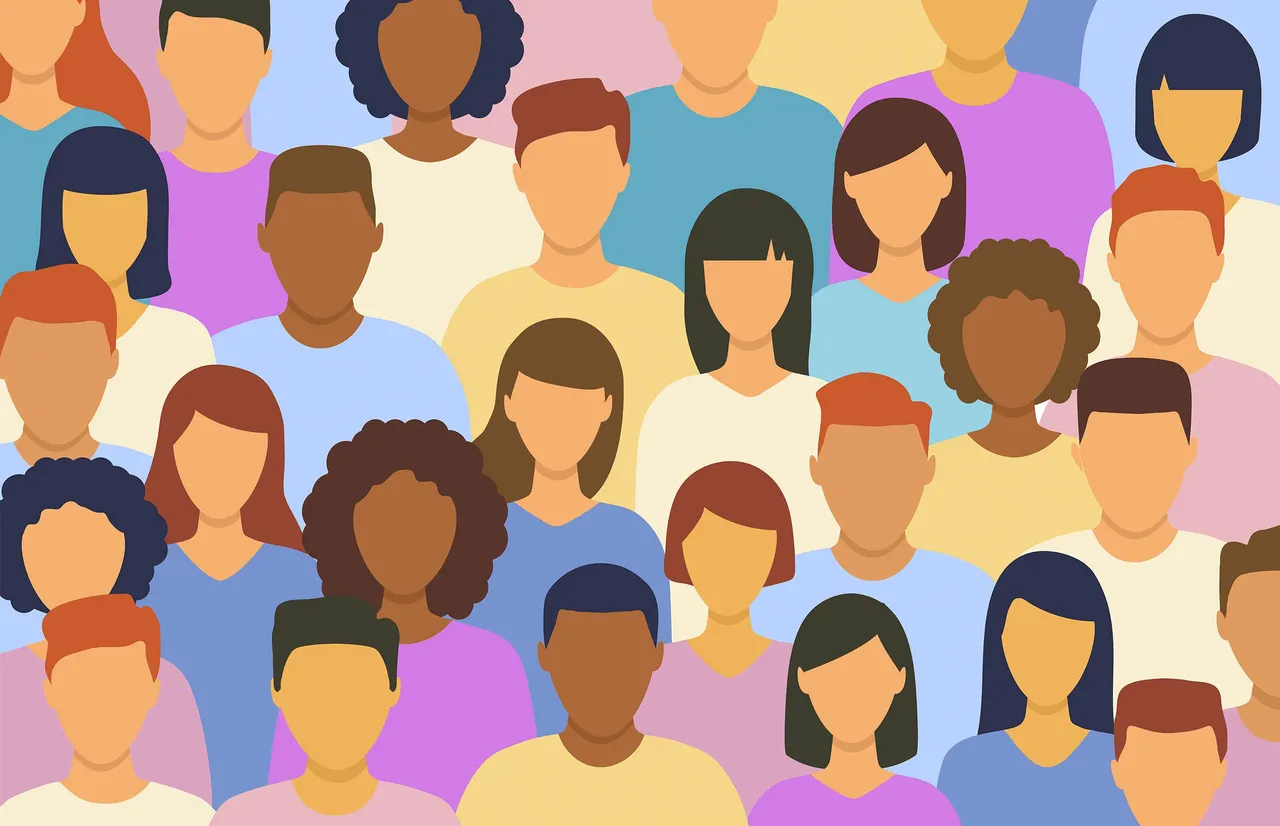


Who are you? How do you interact with the world? When are you at your best as part of a team?
These seemingly simple questions are actually landmines for many, perhaps most, of us when we think about our participation in life, and more specifically the workplace. Employers are not unique in raising the issues of diversity regarding the people we interact with, equity in how people are valued and supported, and meaningful inclusion of people who come from different lived experiences. We pick our friends, and sometimes enemies, based on some of these factors. We create communities where we feel at least the first two of those factors because we can relax in those communities and just be ourselves.
Add in the context of a “DEI Filter” in the hiring process and the nuance underlying those questions can sometimes be completely skipped over because the interviewer thinks they know who you are, how you will interact with the world, and what you will bring to the team based on how you look or their first impression of you and your experience as represented on a resume.
I regularly see discussions around DEI committee membership that openly refer to someone “representing the African American community,” or the “BIPOC community.” I wonder how those people feel about that tokenism. (Because, let’s be clear, if that is how their selection was approached, then they are literally serving as tokens to represent those communities.) How can one person be expected to represent the entirety of the richness, diversity, and lived experience of the African American community? Or any community for that matter?
So, let’s step back away from the ledge for a moment to explore why Diversity, Equity, and Inclusion should be important to us.
Why does DEI Matter?
I would argue that if you can name the communities that you are “looking for” in your search for staff or volunteers, then you have already missed the boat. Diversity is as expansive as the universe, and it changes as quickly as a kaleidoscope changes. That is the reason DEI is important!
Humanity is not linear, formulaic, or even predictable! People are as multifaceted as the pieces in that kaleidoscope. And here is a fun fact: sometimes people can be conflicted as they try to balance all the diversity that is going on inside themselves!
A Learning Exercise
By way of demonstration, let me tell you about an exercise I did many years ago with about 200 high school students. I learned a great deal about DEI (before it was even a thing!) and how tricky it can be, from those students.
The students were part of a Youth Summit focused on Inclusion and how to be agents of change as leaders in their school. The group was made up of roughly an equal number of students with disabilities and those without – that we knew of. I asked them to gather in the middle of the room and suggested that diversity is too often defined by how people see us as opposed to how we see ourselves. One way for us to achieve the benefits of diversity and inclusion might be to understand and value the fact that everyone has multiple identities that they define themselves with depending on the situation. To illustrate that, we participated in a learning exercise.
The Rules: I told them that I was going to give them a series of choices in how to identify themselves. For each round they had to pick ONE identity that was the most important to them. Each identity was assigned a corner of the room and they had to go to the corner that corresponded to their most important identity for that round.
Round One: The choice was between identifying as a “Man, Woman, person WITH a disability, or person WITHOUT a disability.” (Doing this exercise today I would not use gender as an identifier because we understand that there are more than two options. We are learning every day better ways to support each other!)
We learned that for many people who had a disability, it was more important to be identified with their gender. It helped them feel like they belonged and didn’t highlight their “differentness.” We learned that some people had invisible disabilities that even their teachers didn’t know about. They explained that this was the motivation for joining the inclusion movement, even though everyone assumed they were representing the non-disabled population.
Round Two: The choice was between identifying as a “Republican, Democrat, straight person, or Gay or Bi Person.” (Doing this exercise today I would offer the option to identify as a member of the LGBTQIA community instead of just “Gay or Bi.” Progress is made!)
It was interesting that the first three groups were pretty evenly populated. I asked people why they chose this identity. Some felt strongly about political affiliation (this was well before the political nastiness that we live with now). The people who chose the “straight” corner mostly said they just didn’t care about politics and that just left this choice. There was one brave young man who stood alone in the “Gay or Bi” corner. I approached with my mic and asked, “Do you really believe that you and I are the only two gay people in this room?” He said No. This started a discussion about how tiring it is to only be identified by ONE aspect of yourself. Another student spoke up and volunteered that she was gay too, but that being a Democrat was a more important cause for her right now. She wanted to make change.
Lessons Learned: The exercise went for a few more rounds, but you see the point. Who I “represent” should be up to me, not your DEI committee. And I may change which aspect of myself is informing my input and contribution. You may think I am the gay guy talking, but in my mind, I am the parent of two amazing African American children talking. I am also:
- A white CIS male
- Gay, but was married to an amazing woman right out of high school
- A first-generation college student who went to school on PELL grants because I grew up poor
- A self-proclaimed nerd
- Dyslexic
The lucky organization that hires me, gets the benefit of ALL that lived experience. But it comes as a package deal. It can be messy!
Accepting the Challenge
So here is my challenge to you. Ask yourself WHY DEI is important to you and your workplace.
I hope the answer falls somewhere close to, “because we value wisdom that comes from a workforce showing up with a diversity of lived experiences.” Yes, that certainly includes people who look visibly different from most others. But those people who look visibly different from others are also multi-faceted people. What other experiences are they bringing to the table that you overlooked because they checked a box on your DEI chart? What other diversity is lurking in your workforce that you have not acknowledged or valued? What is missing in your workforce in the way of lived experience?
We will never cover all the variations of the human experience. But imagine working someplace where people feel valued on their own terms, because you got to know them and appreciate their diversity and contributions, no matter what your first impression of them was.
Making the effort to truly get to know people and find value in their uniqueness is the ultimate goal, not because you have to as an organization but because you want to as a fellow human being. Hopefully this will start you on a path away from tokenism and checking boxes and toward meaningful inclusion and respect at all levels of your organization.